Why CoreProtect Beats Claim Shovels: How to Find a Truly No-Grief Minecraft SMP for Builders
Looking for a real builder survival server without griefing or ugly claim borders? This guide breaks down why CoreProtect block logging beats golden shovel claims, how consensual PvP keeps building safe, and how private whitelist servers deliver an authentic Hermitcraft experience.

8 min read 1,960 words

CoreProtect protects a peaceful minecraft smp better than golden-shovel claim plugins because it logs every block break and chest interaction invisibly without cluttering terrain or locking land expansion[1]. Combined with a private Discord whitelist and consensual combat toggles, builders keep a pure vanilla landscape while staff can undo any grief in seconds. Every survival builder knows the frustration of spending forty hours detailing roofs and shaping custom terrain, only to log back in to a ruined town—or join a claim server where yellow grid borders slice through their yard and inactive neighbors block expansion.
The Problem with Claim Shovels in a Peaceful Minecraft SMP
For years, public servers have handed new players a golden shovel to create land claims. You right-click two diagonal corners of your base, and the plugin creates a boundary box around your property[2]. Inside that box, strangers cannot open doors or break blocks. While that sounds convenient, it creates three major headaches for builders.
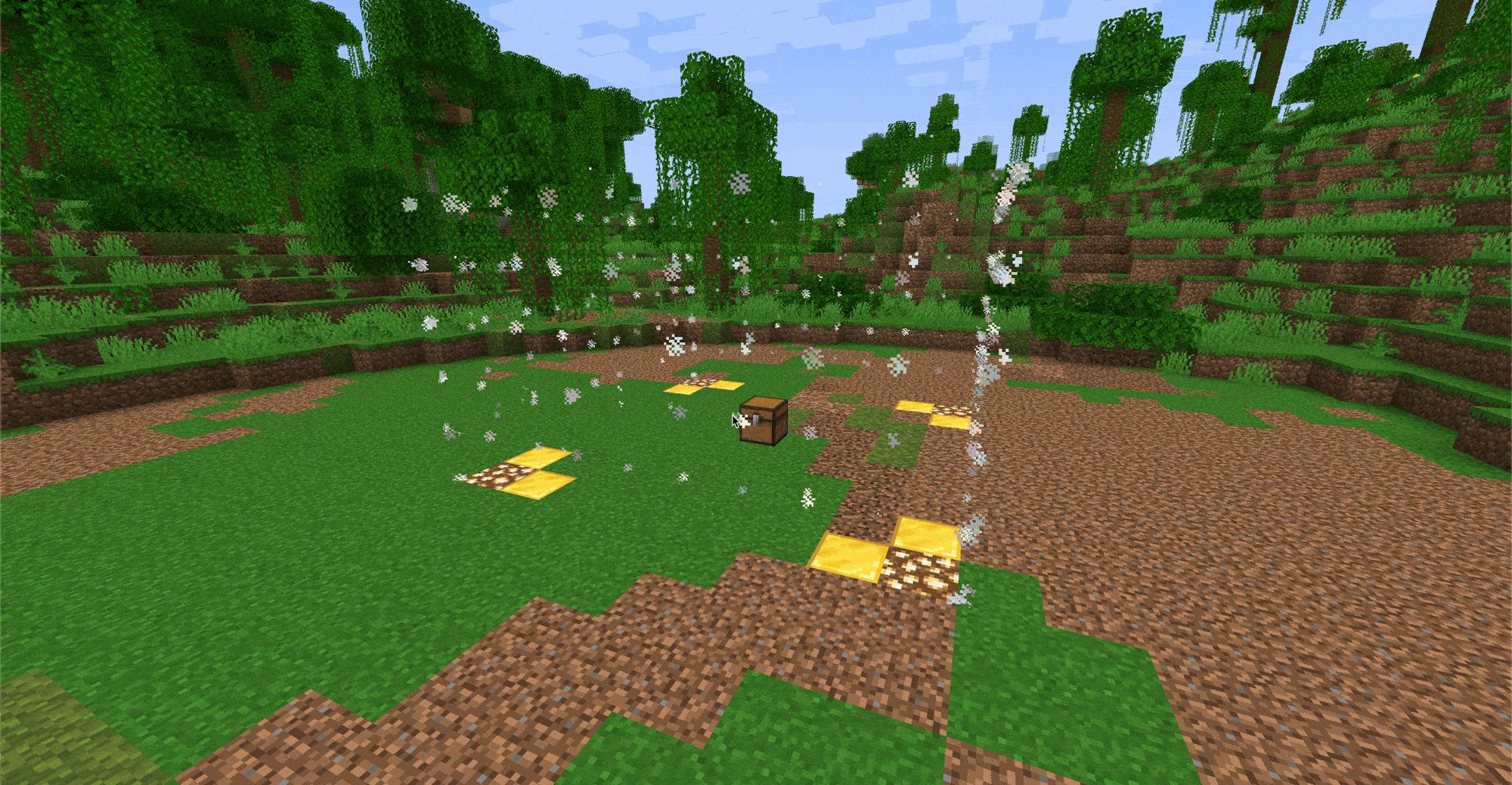
The first issue is visual clutter. Every time you or a neighbor clicks the ground with an inspection item, the plugin lights up the claim perimeter with glowing gold blocks, glowstone pillars, or particle lines[2]. If you build on a mountain or along a riverbank, these rigid square outlines cut through the terrain. What was supposed to be a natural landscape ends up looking like a grid of real estate plots.
The second issue is what builders call the "Ten-Block Trap." Claim plugins give players a limited budget of claim blocks based on hours played or store ranks. As your base grows into a town with roads and bridges, you run out of claim blocks. Even worse, random players often claim small squares right next to your perimeter and then leave the server forever. Because their plot is locked, your build cannot expand in that direction[3]. You have to wait weeks for an admin to remove the abandoned claim, or move somewhere else.
Finally, claims do not stop border trolling. A claim only protects the exact coordinates inside the box[4]. A player who wants to annoy you can place lava buckets or water streams one block outside your line and let the liquid flood over your yard. They can build cobblestone towers right against your wall, push blocks inside using sticky pistons, or dig deep trenches around your border. Because their blocks sit outside your boundary, the plugin allows it completely[4].
Why CoreProtect Works Better for a Peaceful Minecraft SMP
Instead of building digital fences around every house, modern builder communities use CoreProtect[1]. CoreProtect is a server-side tool that keeps track of everything that happens in the world without placing a single restriction on where you can build, explore, or gather materials.

There are no claim shovels, no claim blocks to buy, and no artificial borders. The game world stays completely vanilla. Whenever any player places a block, breaks a block, lights a fire, opens a barrel, or drops lava, the server records that action into a lightweight background database[1].
If a moderator needs to check what happened to a damaged wall or an empty chest, they tap the block with an inspection tool. The server immediately prints the history in chat:
CoreProtect Inspection Output:
[12:14:02] Steve placed stone_bricks.
[15:20:18] PlayerX broke stone_bricks.
[15:20:22] PlayerX opened chest (took: 32x diamond).
[15:20:45] PlayerX placed lava.
If someone damages a build or steals materials from a chest, staff do not rebuild it manually. A moderator runs a single command—such as /co rollback u:PlayerX t:1h r:15—and all broken blocks and stolen items reappear in their exact states in seconds[1].
| Feature & Practical Impact | CoreProtect Setup | Golden Shovel Claim Plugins | Towny Land System |
|---|---|---|---|
| Terrain Appearance | Clean vanilla landscape with zero borders | Glowstone and particle lines on the ground | Town border signs and plot divisions |
| Room to Expand | Build freely in any direction at any time | Limited by claim block counts and playtime | Limited by town gold and plot purchases |
| Chest Security | Full theft history and instant item recovery | Locks chests but offers no event history | Restricted by town member ranks |
| Border Griefing | Staff rolls back any border lava or trenches | Vulnerable to fluid flow right on the edge | Vulnerable to unowned wilderness edges |
| Server Performance | Smooth background writes on separate threads | Constant coordinate checks on every click | Complex tax checks and town calculations |
| Community Feel | Relaxed, trust-based cooperative building | Defensive, isolated, and territorial | Bureaucratic and focused on land management |
There is also a clear performance difference. Claim plugins have to check every single block break and chest click against a huge database of claim coordinates right on the main game thread[3]. When twenty players are mining and farming at the same time, all those checks cause micro-stutters and dropped ticks. CoreProtect writes its records quietly in the background, keeping the server running at a solid 20.0 ticks per second[1].
Consensual PvP: Keeping Combat Fair in a Peaceful Minecraft SMP
Griefing is not just about broken blocks. On open public servers, aggressive players often hunt down builders who are carrying shulker boxes full of supplies or working high up on scaffolding without armor. Dying to a surprise attack when you just wanted to relax and build ruins the entire survival experience.

To solve this without ruining combat completely, builder servers use consensual PvP systems[5]. Instead of turning combat off across the whole map—which prevents friendly sparring matches or organized arena battles—the server uses a simple toggle command like /pvp.
When your combat toggle is set to off, no other player can hurt you with swords, bows, tridents, or splash potions[5]. They cannot drop lava beneath your feet to burn you, and they cannot push you off cliffs. However, this does not turn Minecraft into peaceful mode. Skeletons, creepers, wardens, and phantoms still attack normally. You still get the genuine thrill of surviving dangerous nights and exploring caves, but you never have to worry about toxic players ambushing you while you decorate your house[5]. When you and your friends want to duel inside a battle arena, both players turn the toggle on, fight, and switch it back off when finished.
The Hermitcraft Experience: Trust Over Plugins
Hermitcraft-style survival servers stay safe without claim shovels because private whitelist screening and zero pay-to-win rules build a high-trust community[6]. If you watch creators on popular survival series like Hermitcraft, you notice right away that they never use golden shovels, land claims, or locked chest signs—their bases stay safe because of how players are vetted before joining.

Because anyone can join instantly, public servers treat every newcomer like a vandal, forcing players through lobbies, captchas, and rank locks. A private whitelist turns this upside down. By asking players to fill out a brief application on Discord before joining, the server weeds out almost all griefers before they ever step foot in the world[6]. Trolls want fast, easy targets to ruin. They are not going to spend fifteen minutes writing a polite application about their building style, favorite survival projects, and play habits.
This simple application step creates a relaxed, friendly environment. Players feel comfortable opening shared shopping districts, building community farms, and linking their bases with shared nether ice roads. You never have to hide your diamond barrels under dirt or worry about locking every single door.
Just as importantly, genuine builder servers never sell in-game advantages for real money. Many commercial servers sell extra claim blocks, flying perks, and overpowered kits on web stores. That creates an unfair world where whoever spends the most money controls the land. A genuine community server relies on voluntary player support for server upkeep, keeping gameplay completely fair and earned through honest survival work[6].
How FENZA Runs a Real Peaceful Minecraft SMP
If you want a survival server that puts these ideas into practice every day, FENZA SMP was built from the ground up for people who just want to chill out and build[7]. Instead of cluttering the landscape with claim plots and rules, FENZA protects your creativity with quiet, reliable systems:

- Invisible Grief Protection: Every block change and container interaction is recorded automatically. If something ever happens to your project, active staff members can inspect the area and roll it back in seconds[7].
- No Unwanted Combat: Combat is strictly consensual through /pvp toggle rules. You can build anywhere in total safety without looking over your shoulder[5].
- Survival-Friendly Additions: FENZA includes balanced enhancements like the MoonCycle lunar event system and BTeam for clean group chat and sharing base coordinates, without game-breaking teleports or paid kits[7].
- Java and Bedrock Support: Whether you play on PC, a mobile phone, or a console, you can play in the exact same world alongside friends on other devices[7].
To protect our community from public griefers, FENZA does not share its server IP openly on public forums or websites. Access is reserved for approved builders. Joining takes three simple steps: first, hop into our community Discord at discord.gg/fenza; second, write a quick application in the #applications channel sharing a bit about your survival building background; third, once the team approves your application, you receive the private server IP and whitelist access. That simple check keeps our world peaceful, relaxed, and grief-free for everyone.
Peaceful Minecraft SMP & CoreProtect FAQs
Does CoreProtect cause lag on busy survival servers?
No. CoreProtect sends all block changes and container events to a separate database process running in the background[1]. Because these tasks do not tie up the main server tick loop, high-performance survival servers easily stay at a steady 20.0 TPS even during large multi-block rollbacks.
How do server staff catch thieves if chests are not locked?
Staff use CoreProtect container inspection tools to look directly inside the history of any chest, barrel, or hopper[1]. Clicking the storage block shows a clear chat ledger with player names, exact times, and quantities taken, letting moderators restore stolen gear with a single rollback command.
What happens if an inactive player claims land next to your base?
On claim-plugin servers, an inactive player's claim plot permanently locks that terrain until an administrator steps in[3]. On servers using CoreProtect like FENZA, there are no artificial claim plots. Builders leave natural buffer space around neighbors, and staff can easily tidy up abandoned starter huts.
Can Bedrock and console players join a Java CoreProtect survival server?
Yes. Modern survival servers use GeyserMC translation software on the server end[7]. Mobile, console, and Windows Bedrock players connect just like regular Java players, enjoying full CoreProtect rollback protection without needing to install any third-party mods.
References
- CoreProtect Development Team, “CoreProtect Overview, Database Architecture, and Rollback Engine”, CoreProtect Official Documentation, 2026.
- GriefPrevention Open-Source Project, “Claim Boundaries, Visualization Blocks, and Permission Management”, GitHub Documentation, 2025.
- PaperMC Project, “Server Tick Optimization and Event Dispatch Latency Analysis”, PaperMC Documentation, 2026.
- SpigotMC Community, “CoreProtect & Land Claim Administration Trade-Offs”, SpigotMC Project Resource, 2025.
- WorldGuard & EngineHub, “Region Flags and Player Combat Permission Isolation”, EngineHub Documentation, 2026.
- FENZA SMP Operations, “Community Trust Standards, Whitelist Filtering, and Non-Grief Rules”, FENZA SMP Documentation, 2026.
- FENZA SMP Infrastructure, “Vanilla Survival Architecture, MoonCycle Systems, and Crossplay Integration”, FENZA SMP Feature Specifications, 2026.
FENZA SMP Team
Dedicated survival builders and moderators running FENZA SMP. We build long-term, grief-free multiplayer worlds designed for relaxed survivalists and serious builders.